Strategy
Part of Outsource your social media agencies strategy or keep it in house?
Fix social media agencies strategy mistakes without a bigger budget
Fix social media agencies strategy mistakes without extra spend: missing objectives, weak consent, no review dates, plus a labelled cost example.
What to take away
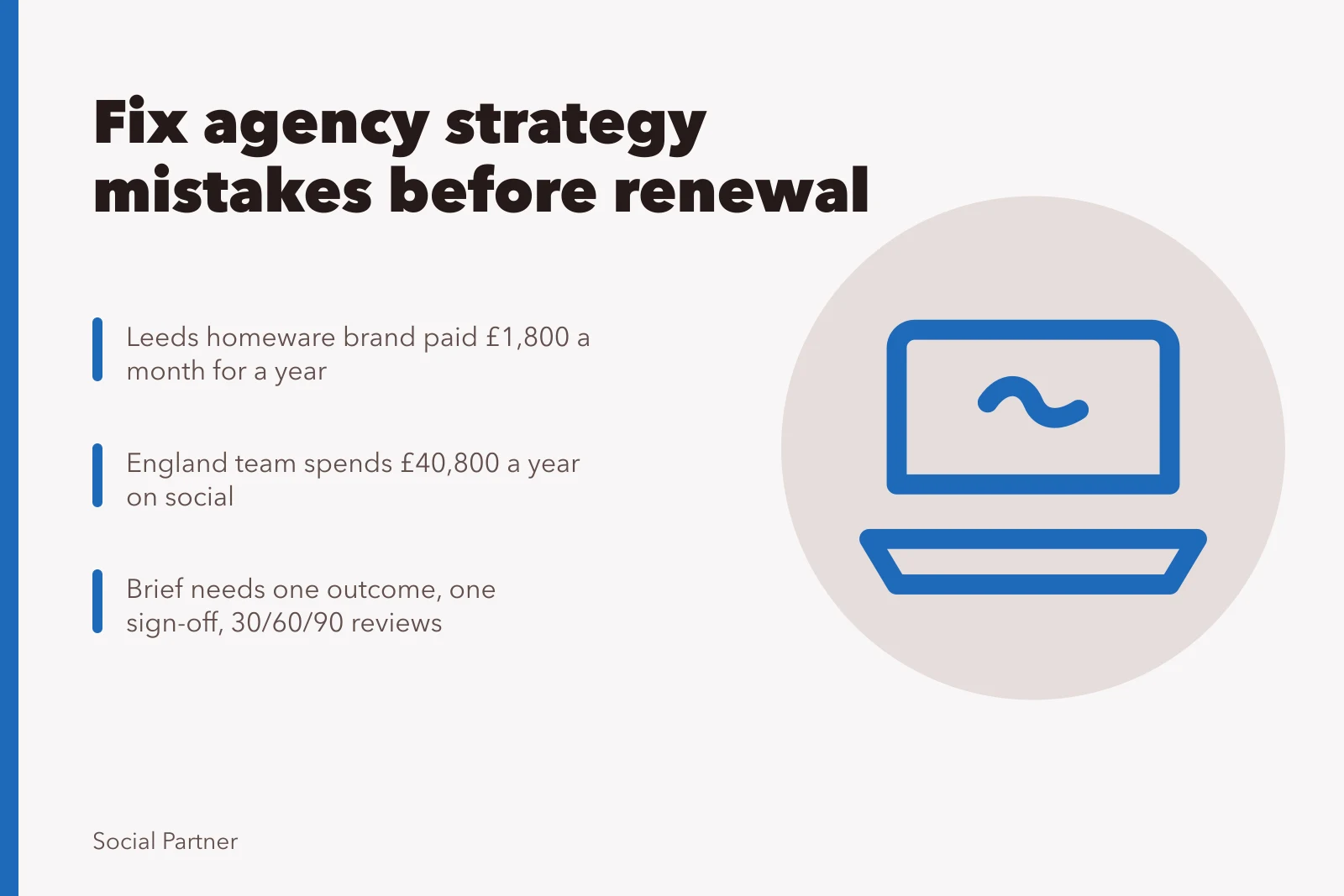
A Leeds homeware brand keeps a £1,800 a month retainer running for a year before anyone checks which posts produced enquiries.
- Write the objective before the content calendar, because every later dispute traces back to it.
- Name one owner on each side, with a review date inside the first 90 days.
- Check the lawful basis for every lead form, list and retargeting audience.
- Keep claims and competitions inside the CAP Code, or expect published sanctions.
This list covers England-based buyers and agencies, and the social media agencies strategy mistakes that recur in English briefs and retainer reviews. It is not a ranking of named agencies, and no product or service has been tested. Use the social media agency directory on this site when you want names to shortlist before the brief goes out. Data protection and advertising rules apply across the UK.
Which mistakes appear most often in England briefs?
Most briefs arrive with a channel list and nothing else. The mistakes below recur in English briefs and reappear at retainer review, and each one has a fix that costs nothing beyond a conversation.
Objectives left out of the brief
If the brief names channels but not the business outcome, the agency optimises for what it can evidence: reach and engagement. Ask for the outcome in writing, with the measurement window and the person who signs it off. The strategy and planning guide on this site shows how objective, audience and channel fit together before spend starts.
Brief mistakes to fix
- Objectives left out of the brief
- Followers treated as headline number
- Channels chosen before audience
- Consent parked as a footnote
- Budget split never agreed
Followers treated as the headline number
A follower count moves for reasons nobody controls, so it makes a poor success measure. Ask instead which enquiries, sign-ups or store visits the work should produce, and how each will be recorded.
Channels chosen before the audience
Platform choice often follows habit or a competitor's feed. Either way, it should follow the audience research: where the buyers are, how they search, and what they will tolerate on a brand account.
Consent parked as a footnote
The UK GDPR, read with Part 2 of the Data Protection Act 2018, sets out the principles and the lawful bases for campaigns that build audiences from lead forms, customer lists or retargeting. Consent for marketing messages, and the cookies or pixels behind a retargeting audience, sit under PECR, the Privacy and Electronic Communications Regulations. A plan that ignores either starts with a compliance debt.
Budget split never agreed
An England buyer paying £2,000 a month should know how much of that buys creative, community management and reporting. When the split is unstated, the agency decides it, and paid media quietly absorbs the rest.
Exit terms left until the dispute
Ask now what happens to account access, creative files and audience data if the contract ends. Recovering a business page from an agency that has gone quiet takes far longer than agreeing handover in the schedule.
Risk parked until a complaint arrives
The ICO's published enforcement action and its direct marketing guidance show what follows a data breach or nuisance marketing, and any organisation that processes personal data must pay the ICO's annual data protection fee unless an exemption applies. The ASA's sanctions page explains what happens when an ad or competition breaks the CAP Code. Neither outcome appears on a content calendar.
What does a strategy mistake cost in practice?
An England team pays £2,500 a month for social media management and £900 a month for paid media, or £40,800 a year. If the brief skips the objective, the first quarter goes to reach.
The renewal review finds no cost per enquiry, and the contract ends with three months left: roughly £10,200 committed to work nobody will use. A review at day 30, inside the first quarter of that retainer, would have caught the gap while there was still time to reallocate.
What should the brief cover instead?
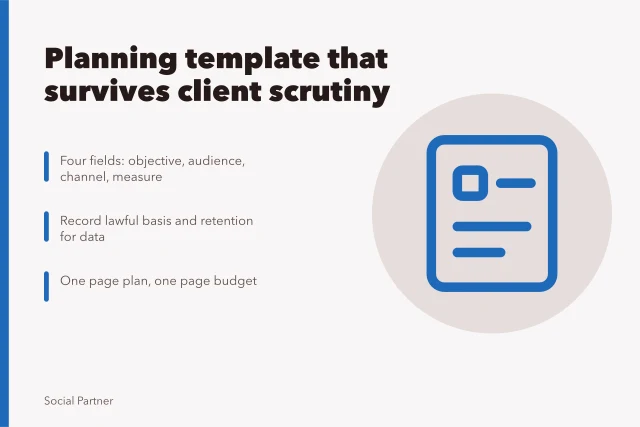
- One outcome, one measurement window, one sign-off name.
- The audience segment and the lawful basis for holding it.
- A budget split across creative, community and paid.
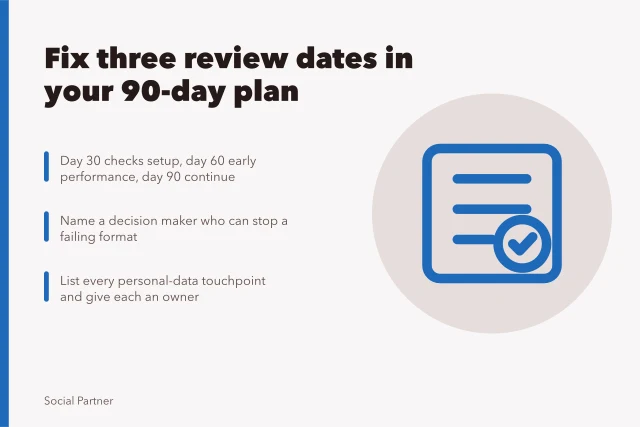
- Review dates at 30, 60 and 90 days.
- Handover terms covering access, files and data.
Each item fits on a single page, which is what makes it checkable at review time. Anything longer tends to be read once and then shelved.
How do you fix this without a bigger budget?
None of these repairs needs new money. Each one moves spend that is already committed, or stops paying for work nobody uses.
- Reallocate rather than addkeep the channels that produce recorded enquiries, pause the weakest one, and move that share into measurement and reporting.
- Use what the retainer already buysthe platforms' own analytics, the agency's monthly report, and the review meetings already in the schedule.
- Write the change into the next schedule, so the invoice total stays the same and only the split moves.
Common questions
The questions below are the ones that come up most often in retainer reviews and handover meetings.
Do these mistakes differ across the UK?
The commercial ones do not. Data protection and the advertising codes apply across the UK, so a brief written in England transfers to Cardiff or Glasgow with little change.
How many mistakes should a brief fix at once?
Two, or three at most. Start with the objective gap and the measurement gap, because both make the other mistakes harder to see.
What should trigger a review before renewal?
A missed reporting date, a platform policy change, or a complaint about an ad. Each gives grounds to reopen the plan without waiting for the contract to end.