Strategy
Part of Outsource your social media agencies strategy or keep it in house?
How to build a social media agencies strategy framework that holds
A step-by-step method for planning a social media agencies strategy framework, covering objectives, channel choices, governance and a 90-day test cycle.
What to take away
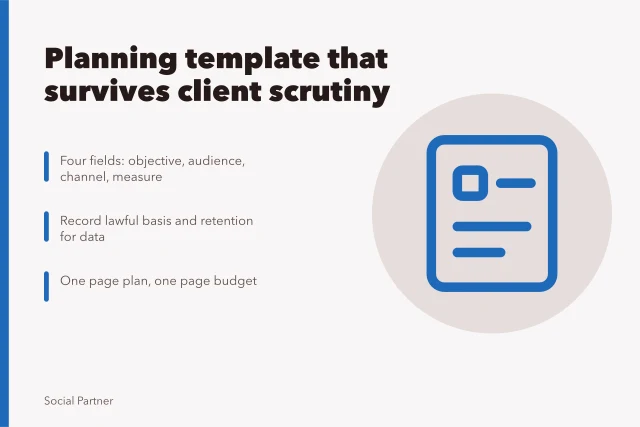
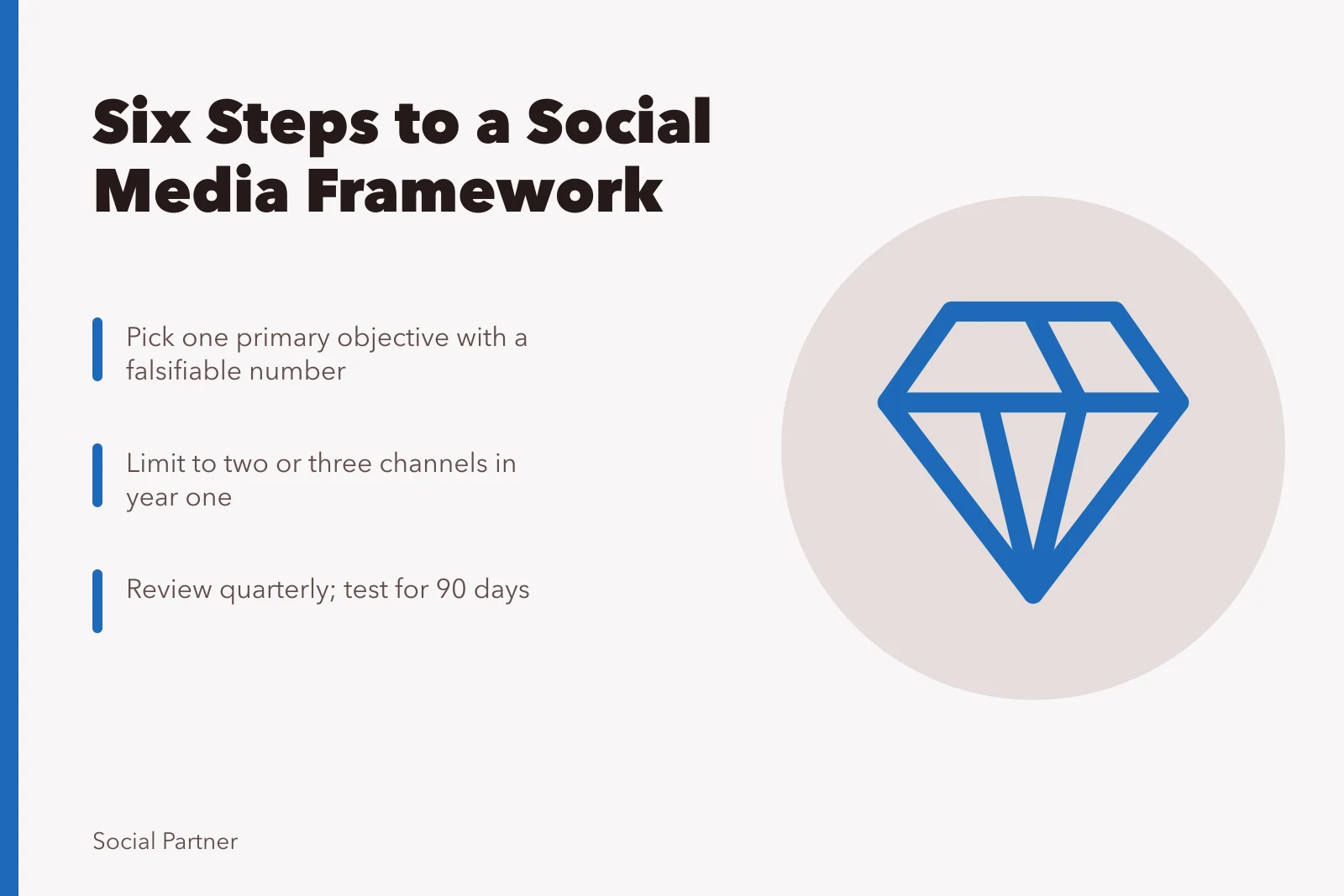
A social media agencies strategy framework is the written set of choices that connects a client's commercial goal to the channels, content, budget and controls an agency will run. Build it in six steps. Agree the objective, map the audience and choose channels. Then set the operating rules, assign governance and test for 90 days.
Keep the document under ten pages so it stays usable. Review it quarterly, not annually: platform rules and audience habits move faster than a yearly planning cycle. Every claim in it should trace back to a source you can name.
Start from one measurable objective
A framework fails when it tries to serve four goals at once. Pick one primary objective, such as qualified enquiries, and write the number you expect. Give secondary goals a smaller share of budget.
One measurable objective
- 120tracked enquiries per month
- £6,000monthly paid budget
- 1primary objective
For a UK retailer, an illustrative target might be 120 tracked enquiries a month from a £6,000 monthly paid budget. That figure is an example, not a benchmark. The point is that the number is falsifiable, so the agency can be judged against it.
If you are still choosing between an in-house team and an external one, the strategy and planning guide sets out how that decision changes the rest of the framework.
Map the audience before the channels
Write down where your buyers already spend time and what they want from you. Channel choice follows that evidence, not the reverse.
Use first-party data where you have it: site analytics, CRM records, sales call notes. Where you rely on personal data for targeting or measurement, the UK GDPR guidance and resources from the ICO explain the lawful basis, consent and retention rules that apply.
Choose channels and set the operating rules
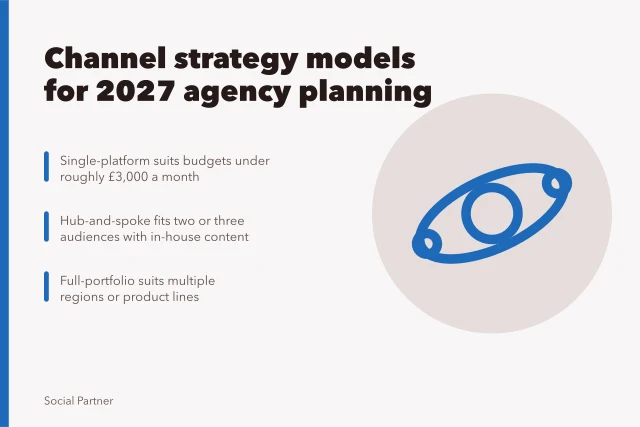
Limit the framework to two or three channels in the first year. Each one needs a stated role: acquisition, retention or reputation.
Operating rules to set
- Posting cadence
- Tone of voice
- Approval thresholds
- Comment and complaint response times
- Calendar ownership
- Hostile thread escalation route
Then set the rules that stop drift. These include posting cadence, tone, approval thresholds, response times for comments and complaints, and who owns the calendar. Put the escalation route for a hostile thread in writing, with a named person and a time limit.
Where paid social sits inside the plan, LinkedIn Campaign Manager is the tool that holds campaign structure, audiences and budgets for that platform, so agree early who has admin access and how spend is capped.
Assign governance and data duties
Governance covers who approves, who pays and who can pause activity. Name one accountable owner on the client side and one on the agency side.
Data sharing between the two needs a written basis. The Digital Economy Act 2017 is part of the wider statutory picture for online services and data sharing in the UK. Check how your arrangements sit alongside it before you sign a data processing agreement.
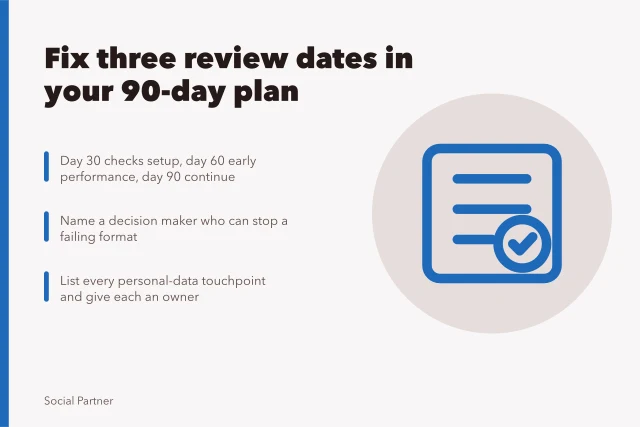
Set a monthly performance review and a quarterly strategy review. Keep both to a fixed agenda so they do not become status updates.
Build a 90-day test cycle
A framework should be tested in short cycles rather than launched and left. The ninety day plan breaks the first quarter into weeks, which makes it easier to assign owners and deadlines.
Run three tests per quarter at most. Each test needs a hypothesis, a single metric and a stop date. Kill anything that has not moved its metric by the stop date.
Before and after: what changes when the framework is written
Before and after framework
Before
- Objective
- Several competing goals
- Channels
- Added on request
- Approvals
- Ad hoc messages
- Data
- Unclear basis
- Review
- Annual
- Testing
- Continuous tinkering
After
- Objective
- One primary goal with a number
- Channels
- Two or three with defined roles
- Approvals
- Named approvers and thresholds
- Data
- Documented basis and retention
- Review
- Monthly performance, quarterly strategy
- Testing
- Three timed tests per quarter
Common questions
How long should the framework document be?
Aim for six to ten pages. Anything longer tends to go unread after the first month, and the operating rules are the part people actually need day to day.
Who should own the framework?
The client should own the objective and the budget. The agency can own channel execution, testing and reporting, but accountability for the commercial goal stays in house.
How often should it be reviewed?
Review performance monthly and the strategy quarterly. Rebuild the framework annually, or sooner if a platform changes its rules or costs in a way that breaks the plan.
What if the agency proposes a different framework?
Ask them to map their proposal against your objective and governance rules. If it cannot show how each channel serves the primary goal, treat it as a pitch rather than a plan.