Reviews
Part of How to judge social media agencies reviews and verify claims before shortlisting
Five checks to test a social media agency's claims
Five public checks that test a social media agency's claims: Companies House, Clutch, Trustpilot, the LinkedIn Marketing Partner Directory and ASA rulings.
What to take away
- Most of what a social media agency says about itselfawards, growth, retention rates, specialist status — is a vendor claim. Evidence is what a third party publishes.
- Five public checks a buyer can run go past those claims: Companies House, Clutch, Trustpilot, the LinkedIn Marketing Partner Directory and Advertising Standards Authority rulings.
- All five are public, and none needs the agency's permission to run.
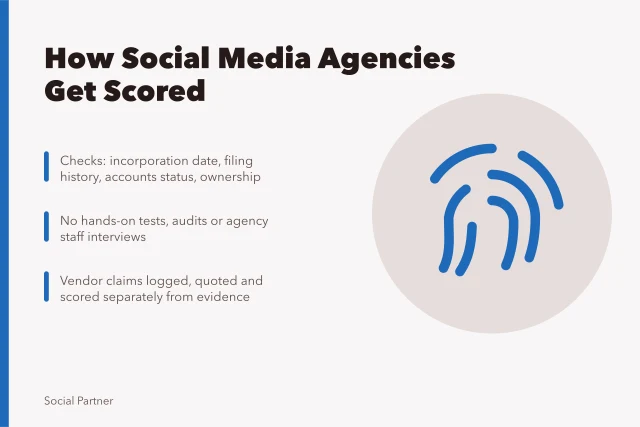
- No agency was briefed, retained or mystery-shopped for this guide.
- A thin public record usually points to a disclosure problem, not misconduct.
What was assessed
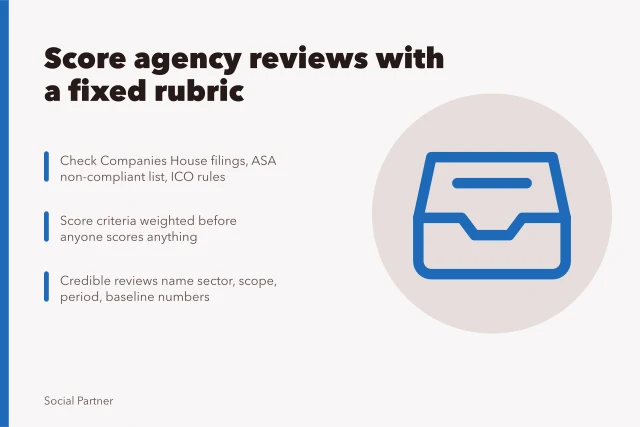
Each check uses material a buyer can check without contacting the agency. That means Companies House filings, published case studies, platform partner directories and regulator rulings that name the business.
We also read agency service, pricing and team pages. A minimum retainer quoted on an agency site is a vendor claim, so note the date it was published.
Audience data frames what an agency sells. The internet access reference tables from the Office for National Statistics show UK adult and household social media use. That gives a baseline for reach claims.
What was not assessed
We did not test campaigns, sit in pitches or speak to clients.
Private terms were not reviewed. Discounts, notice periods and exit clauses sit in contracts we have not seen.
Testimonial attributions were not verified. A named quote on an agency site is a vendor claim unless the client confirms it.
Five checks that go past vendor claims
Companies House is free to search. It shows incorporation date, directors, accounts and filing history. It can verify whether Social Chain or We Are Social is an active UK company. It cannot verify campaign results.
Five checks beyond vendor claims
Companies House
- What it verifies
- Company status
- What it cannot verify
- Campaign results
- Paid influence
- None
- Cost to search
- Free
Clutch
- What it verifies
- Review presence
- What it cannot verify
- Editorial independence
- Paid influence
- Enhanced profiles
- Cost to search
- Free
Trustpilot
- What it verifies
- Complaint patterns
- What it cannot verify
- Campaign performance
- Paid influence
- Paid features
- Cost to search
- Free
- What it verifies
- Platform relationship
- What it cannot verify
- Client results
- Paid influence
- None
- Cost to search
- Free
Clutch lists agencies and reviews. Agencies can pay for enhanced profiles and lead generation, so placement sits beside editorial content. Treat a Clutch badge as a signal to check the underlying reviews.
Trustpilot lets anyone leave a review. Businesses can pay for features and invite customers. It is useful for complaint patterns, but a high score is not proof of campaign performance.
The LinkedIn Marketing Partner Directory lists agencies that meet LinkedIn's criteria. A badge confirms a platform relationship, not client results.
The Advertising Standards Authority publishes upheld rulings. A search by agency name shows regulatory history. No ruling is not a clean bill of health.
Separating claims from evidence
A claim is anything the agency says about itself: awards, growth, retention rates, specialist status. Evidence is anything a third party publishes.
Platform documentation helps check targeting and format claims. LinkedIn's own guidance on audience targeting for advertisers shows what the platform supports, so a claim about niche B2B reach can be tested against it.
Regulatory context matters too. The Digital Markets, Competition and Consumers Act 2024 changed how digital advertising and consumer protection rules are enforced. Agencies selling to consumers should explain what that means for clients.
The review methodology explained for buyers sets out weightings, evidence tiers and how disputes are handled.
Scoring and editorial judgement
Scores run across five areas: evidence quality, pricing transparency, regulatory awareness, sector fit and complaint history. Each is scored out of five and weighted equally.
A low score usually reflects thin public evidence, not misconduct. Small agencies often publish little, which is a disclosure problem.
Where an agency publishes nothing verifiable, we say so. An empty evidence column is a prompt to ask harder questions.
How to use these checks
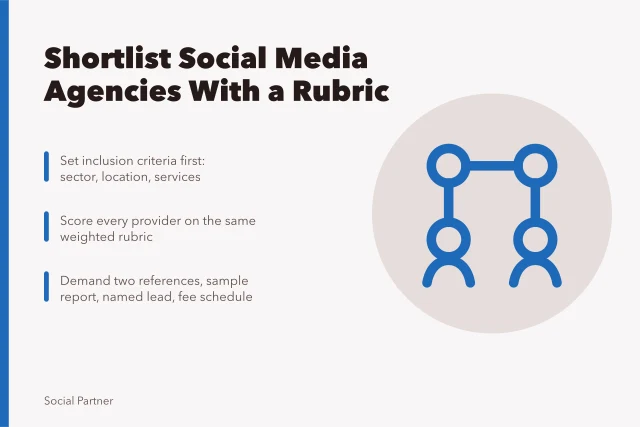
Treat the checks as a screening tool, not a decision. They narrow a long list to a shortlist worth a conversation.
Ask each shortlisted agency for the evidence behind its strongest claim. If it cannot produce a source, treat the claim as marketing.
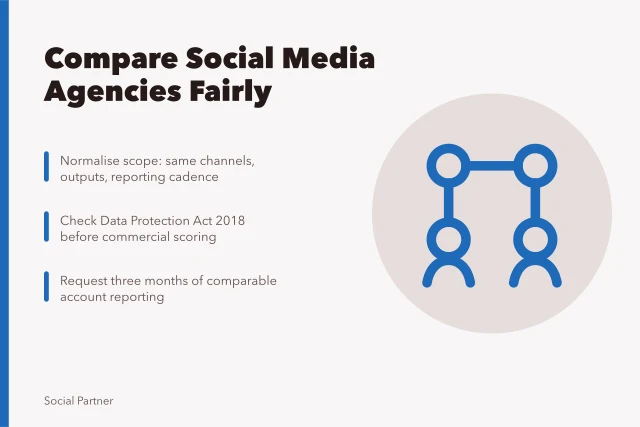
The reviews and comparison methods guide explains how to weigh conflicting signals across a shortlist before you brief anyone.
Run the checks again before you sign. Filings, pricing and partner status change, so anything verified six months ago may be stale.
Common questions
Do these reviews involve hands-on testing?
No. No agency was briefed, retained or tested. Assessment relies on public records, platform documentation and published material only.
Can an agency dispute its score?
Yes. Agencies can submit verifiable evidence, which is reviewed against the same method applied to every entry.
How current are the entries?
Each check carries the date it was last run. Treat anything older than six months as a prompt to re-verify key claims.