Measurement
Part of What social media agencies measurement means for buying and reporting
When to fix social media agencies measurement mistakes
A listicle on common social media agencies measurement mistakes and when to fix each one, with a before-and-after table and UK evidence rules for reporting.
What to take away
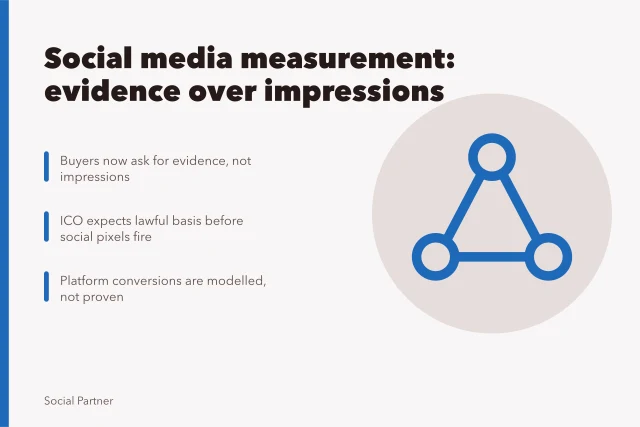
- Buyers increasingly compare pitches on reported evidence rather than reach, so a vague measurement plan now costs agencies work.
- Regulators read social posts as ad claims. The Consumer Protection from Unfair Trading Regulations 2008 still govern misleading claims, and the ICO's UK GDPR guidance covers personal data used in measurement.
- Reports that mix platform vanity metrics with client outcomes fail commercial scrutiny, because the two measure different things.
- The before-and-after table below sets out what to change and when, so each fix becomes a dated commitment rather than a promise.
- Fix measurement before you renew a retainer, not after the client asks where the budget went.
Which mistakes should you fix before the first client report?
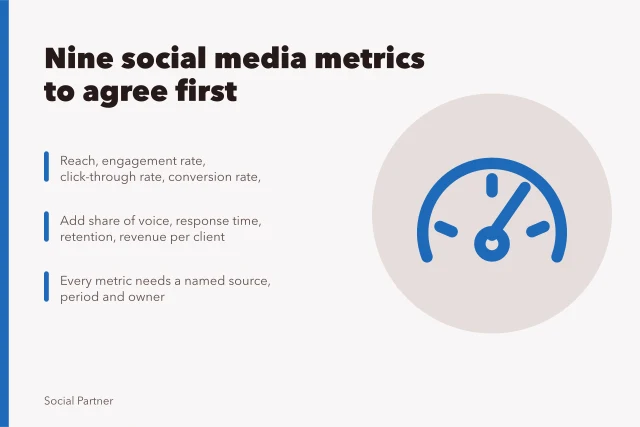
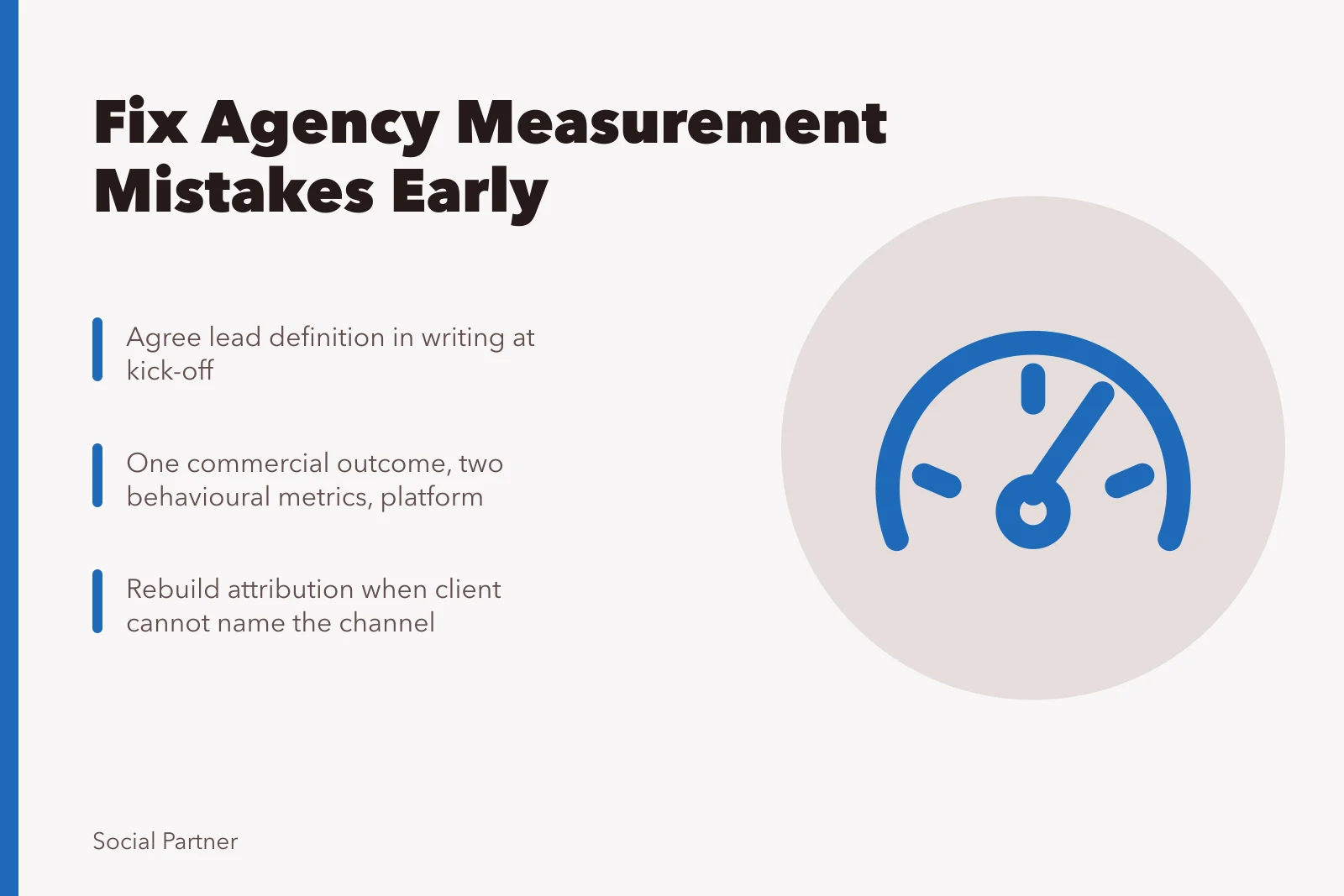
Start with definitions. If the agency and the client disagree on what a lead is, every later number is arguable. Agree the definition in writing at kick-off.
Fix Before First Client Report
- Agree lead definition in writing
- Check personal data lawful basis
- Set separate reporting windows
- Complete evidence files
Then check the data trail. Personal data used to build audiences or match conversions falls under the UK GDPR guidance and resources, so lawful basis, retention and access requests belong in the measurement plan, not a side note.
Set the reporting window next. Weekly reach and quarterly pipeline need separate reports. Combining them hides the trend the client actually buys, and the pack grows without growing clearer.
For the full order of work, the measurement and reporting guide for social media agencies walks through definitions, windows and evidence files before a single number is published.
Are you measuring reach when the client buys pipeline?
Reach is a distribution metric. It answers how many people saw a post, not what changed commercially. Pipeline answers what moved.
Reach vs Pipeline Metrics
Reach
- Question
- How many saw
- Type
- Distribution
- Example
- Reach doubles
- Role
- Diagnostic
Pipeline
- Question
- What moved
- Type
- Commercial
- Example
- Enquiries flat
- Role
- Headline
For example, a team paying £3,000 a month for social media management may see reach double while enquiries stay flat. The report looks busy and proves nothing.
The fix is a hierarchy. Put one commercial outcome at the top, two supporting behavioural metrics in the middle, and platform metrics underneath as diagnostics.
Write the hierarchy down and date it. When a client asks for a new metric mid-quarter, the hierarchy shows whether it replaces something or simply adds noise.
When should you rebuild attribution for paid and organic activity?
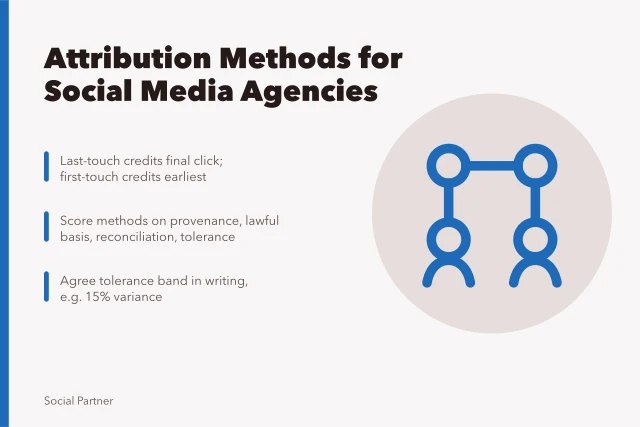
Rebuild when the client cannot say which channel produced an enquiry. That usually appears at the second or third review.
Rebuild Attribution?
Can the client say which channel produced an enquiry?
No -> Rebuild attribution model
Yes -> Keep model, set review date
Platform-reported conversions flatter the channel that reports them. A neutral source, such as a CRM or a post-purchase survey, gives a comparable figure.
Set a review date for the model itself. If sales cycles run for months, a 30-day attribution window will always undercount.
Record which sources feed the model and who owns each one. An unowned data feed breaks quietly, and the first sign is usually a sudden rise in reported conversions.
Which claims in your reports need evidence behind them?
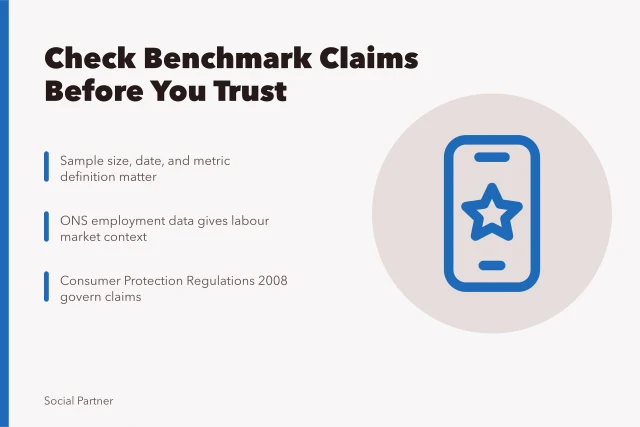
Any claim that a campaign improved results, saved money or beat a competitor needs substantiation. The Consumer Protection from Unfair Trading Regulations 2008 underpin how advertising claims are assessed.
Creator partnerships carry the same duty. Research on why smaller influencers offer better marketing ROI shows follower count is a weak proxy for return, so report cost per outcome instead.
Keep a one-page evidence file per campaign. It should name the source, the date and the calculation.
If the source cannot be named, cut the claim rather than soften it. Procurement teams read the evidence file before they read the dashboard.
Before and after: what a measurement fix looks like
Before
- Headline metric
- Impressions and reach
- Audience data
- Collected without a stated basis
- Attribution
- Platform-reported only
- Creator reporting
- Follower count and engagement rate
- Claims
- Vague uplift language
- Review point
- Annual, informal
After
- Headline metric
- Cost per qualified enquiry
- Audience data
- Lawful basis and retention recorded
- Attribution
- Platform plus CRM or survey source
- Creator reporting
- Cost per outcome by creator
- Claims
- Figure, source and date stated
- Review point
- Fixed dates each quarter
How do you keep a measurement fix from slipping?
Put the changes in the retainer schedule with owners and dates. A fix without a date is a preference.
Give the client one page they can forward internally. Decision-makers rarely read dashboards, but they read a single page that names the outcome and the cost.
Review the metric set each quarter. Remove any metric nobody has acted on in three months. Fewer numbers, better argued, survive procurement scrutiny.
When a client asks which numbers belong in a monthly pack, the guide to key metrics for social media agencies in England sets out the figures that review panels tend to accept.
Common questions
How many metrics should a client report carry?
One commercial outcome, two behavioural metrics and a small diagnostics block is usually enough. Anything more competes for attention.
Can an agency report platform data alone?
It can, but the client cannot then compare channels on equal terms. Add a neutral source for any conversion claim.
When should measurement be reviewed mid-contract?
At each scheduled review point, and immediately if the client changes its definition of a lead or a sale.
Does the ICO guidance apply to aggregated reporting?
It applies where personal data is processed, including audience building and conversion matching. Aggregated output can rest on personal data at an earlier stage.