Tools and providers
Part of How should you compare social media agencies tools before signing?
Why social media agencies supplier comparison needs a process
A process-led comparison of social media agencies suppliers, covering evidence, platform access, data rights and a practical scoring checklist for buyers.
What to take away
- Compare suppliers on written evidence, not pitch decksnamed team, platform certifications and reporting samples.
- Treat platform access and data rights as deal-breakers, not extras.
- Score every supplier on the same weighted checklist so the cheapest quote does not win by default.
- Agree who owns ad accounts, creative files and audience data before any contract starts.
- Ask every supplier to quote the same scope so price differences mean something.
Weighted scoring beats gut feel
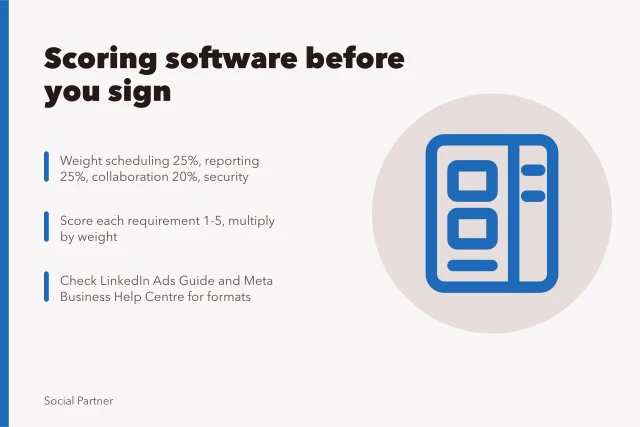
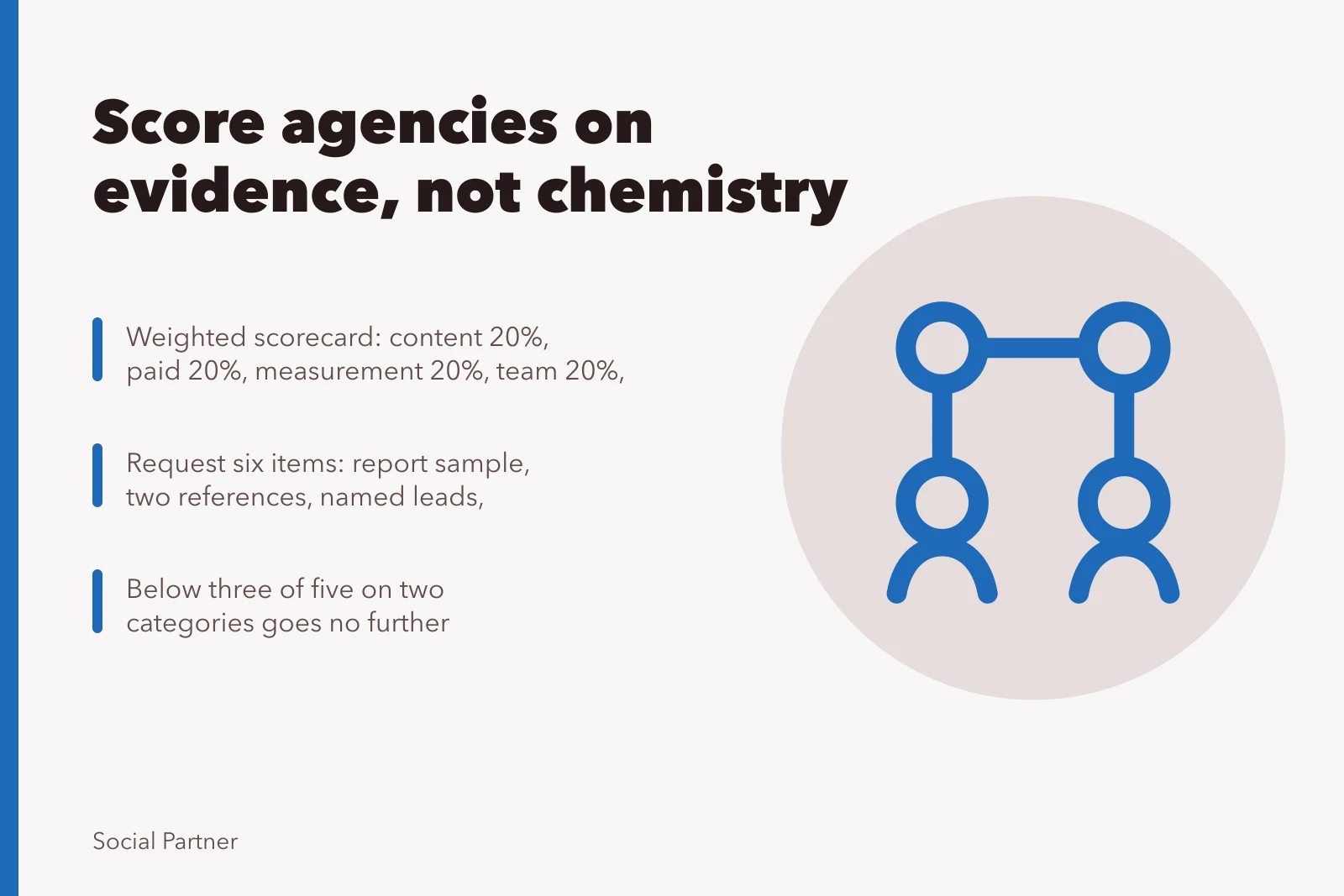
Most buyers shortlist three or four social media agencies and then pick on chemistry. A weighted scorecard forces the panel to justify each mark against evidence. Give content distribution 20 per cent, paid media 20, measurement 20, team 20 and commercial terms 20. Weights need not be equal though.
A brand investing heavily in paid social might give paid media 30 per cent and cut team to 10. Anything scoring below three out of five on two or more categories goes no further.
Weighted scorecard categories
- Content distribution20%
- Paid media20%
- Measurement20%
- Team20%
- Commercial terms20%
Evidence to request from each supplier
Ask every social media agencies supplier comparison candidate for the same six items: a sample monthly report with real numbers, two client references, named account leads, a platform certification list, a content calendar excerpt and a data retention summary.
Suppliers that cannot produce a report sample within five working days are unlikely to produce one on time in month three.
For search and content claims, ask suppliers a direct question: how do you handle indexing and feed distribution for our pages? Ask them to cite the Google crawler overview documentation they work from. Vague answers usually mean the work sits with a junior.
Platform access and account ownership
Confirm who owns the ad accounts, pixels and audience lists. On paid social, LinkedIn's ad resources for marketing agencies set out agency-facing tools for campaign management and reporting, which is a sensible baseline for questions about access levels. If a supplier insists on owning the accounts, treat that as a red flag.
For video, YouTube's advertising information explains the formats and buying routes, so you can test whether a supplier understands the difference between in-feed, Shorts and skippable placements. A supplier that cannot explain format choice is selling reach, not outcomes.
Data rights and contract exit
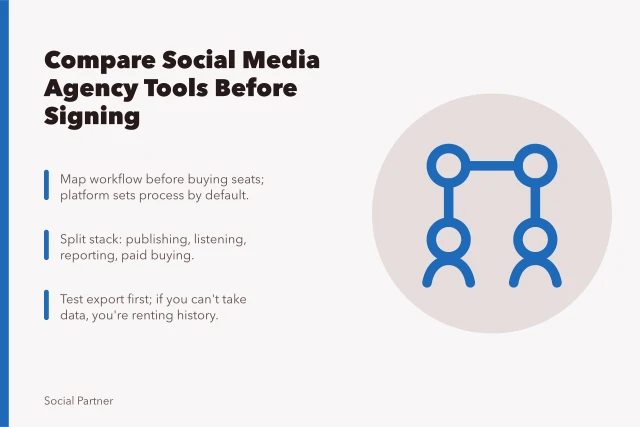
Ask what happens to creative files and historical reporting when the contract ends. A supplier that will not export raw data is holding your account hostage. Put the export format and timeline in the contract.
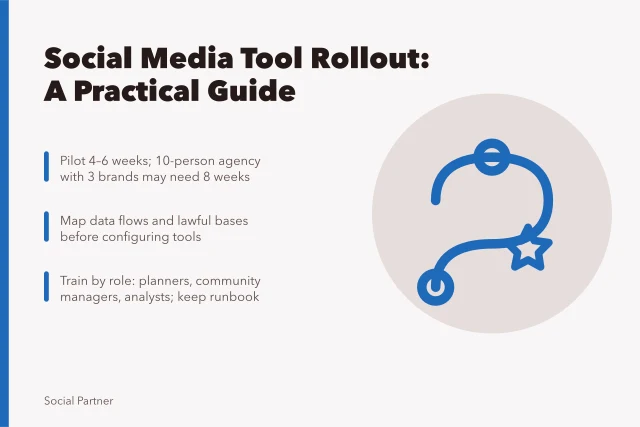
For how to set up the tools after you have chosen a supplier, see the social media agencies tool implementation guide. For the full procurement sequence that comes before this comparison stage, see the social media agencies tools and supplier guide for 2027.
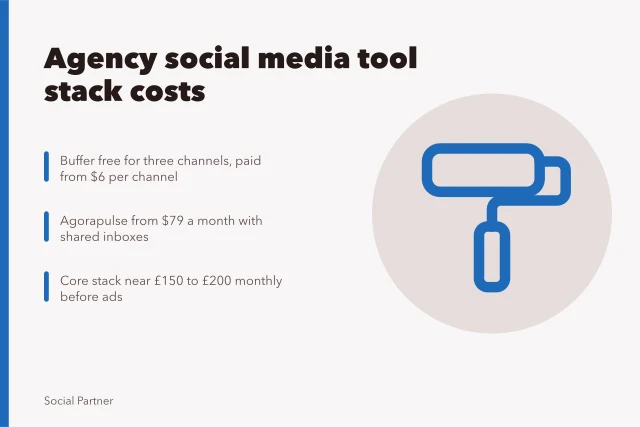
Budget for the exit: for example, a team paying £2,500 a month may need one month of overlap for migration. Retained social media management fees vary widely with channel count, content volume, paid media spend and reporting depth. Ask every supplier to quote the same scope so comparisons are fair.
Comparison checklist
- Named account lead and escalation contact.
- Sample report with real, dated numbers.
- Platform certifications for the channels you use.
- Written data retention and export policy.
- Account ownership confirmed in writing.
- Two references you can call.
- Fixed fees and any performance component.
- Notice period and exit assistance.
- Insurance and data protection documents.
Score each line zero to five. A supplier scoring under 30 out of 45 should not proceed, however good the pitch felt.
For example, a supplier might score:
That supplier sits exactly on the threshold. Drop account ownership to 0 and data retention to 1, and the total falls to 27, so they would not proceed.
Red flags in pitches
Watch for guaranteed follower counts, refusal to name the account team, and reporting that only shows reach. Also watch for suppliers who quote platform algorithm changes as an excuse for missing targets without a documented change log. Ask for the change log.
Common questions
How many suppliers should we compare?
Three to five is workable. Fewer than three gives no real benchmark, and more than five slows the panel without improving the decision.
Should price be the first filter?
No. Use the scorecard first, then compare price only among suppliers that clear the evidence threshold. Cheap quotes often exclude reporting or strategy time.
What contract length is normal?
Six or twelve months is common for retained social media management. Anything longer should include a break clause at six months.
Who owns the creative assets?
You should. Confirm in writing that source files, audience data and ad accounts transfer to you on request, at no extra cost.