Costs and pricing
Part of Social media agency retainer vs project: UK pricing explained
Social media agency retainer vs project: UK pricing explained
Compare social media agency retainer and project pricing in the UK: typical monthly retainer bands, fixed-fee campaign costs and which model suits an SME.
What to take away
- Retainers buy ongoing capacitypublishing, replies, reporting and often paid ad management, billed monthly.
- Projects buy a defined deliverable with a fixed price and an end date, such as a channel launch or a seasonal campaign.
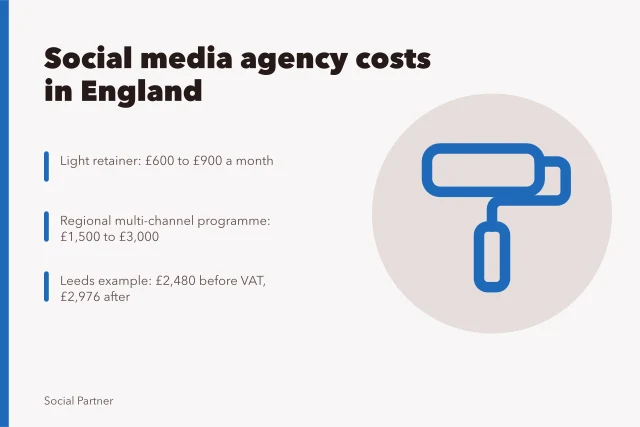
- Quoted UK bands stretch from around £500 a month for a single channel to £5,000 or more for multi-channel work with paid media.
- Retainers suit brands that publish every week. Projects suit launches, rebrands and short seasonal pushes.
- Compare notice periods, asset ownership and excluded costs before you commit either way.
What a retainer buys, and what a project buys
A retainer is a rolling monthly fee for a set number of hours or outputs. You are buying capacity, not a finished item, so the agency can move effort as your priorities change. You also pay in quiet months, which is the price of continuity.
A project is a fixed scope at a fixed price with a finish line. Scope is normally recorded in a statement of work, which the Wikipedia entry on statement of work describes as the document setting deliverables, timelines and acceptance criteria. Projects give budget certainty. They do not give you anyone to answer comments next Tuesday, and extra requests become a new quote.
Whichever model you pick, check the agency before you check the price. Our guide to social media agency red flags covers the contract terms and reporting gaps that British businesses most often miss.
Typical UK retainer bands
No official index publishes agency rates, so treat the figures below as planning bands rather than market data. They reflect the spread you will see in quotes for small and medium-sized firms.
| Retainer level | Illustrative monthly fee | What is usually included |
|---|---|---|
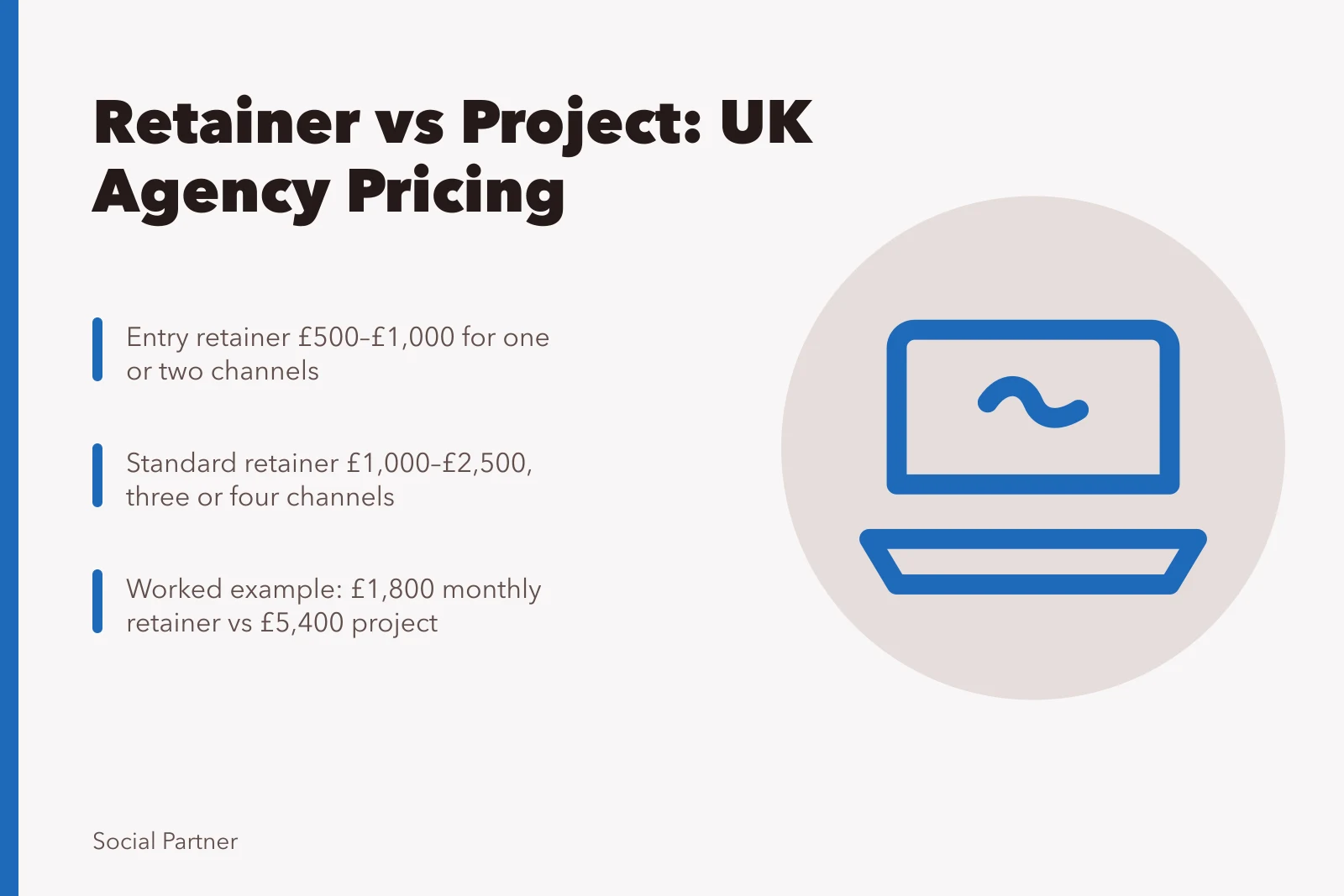
| Entry | £500 to £1,000 | One or two channels, 8 to 12 posts a month, scheduling, basic reporting |
| Standard | £1,000 to £2,500 | Three or four channels, content production, community management, monthly reporting |
| Growth | £2,500 to £5,000 | Paid media management, creative testing, creator or influencer work |
| Full service | £5,000 and above | Multi-market publishing, an always-on content studio, senior strategy, paid media at scale |
Business size drives the budget. ONS business activity, size and location data shows the vast majority of UK private sector businesses employ fewer than ten people. A ten-person firm rarely needs a full-service retainer. It needs a narrow scope and a clear notice period.
What pushes the monthly fee up
- The number of channels you publish to, and how often.
- Whether the agency manages paid media, and how large the ad budget is.
- Video and photography production, which is the most labour-heavy line.
- Community management hours, including evenings and weekends.
- Strategy time, senior reviews and reporting depth.
A worked example at £1,800 a month
An illustrative example. A Manchester retailer sets aside £1,800 a month. Option one is a monthly retainer at £1,800 covering three channels, community management and reporting. Option two is a fixed spring campaign at £5,400, billed once, lasting three months.
Retainer vs project at £1,800
Monthly retainer
- Cost
- £1,800 a month
- Duration
- Rolling monthly
- June activity
- Publishing continues
- Messages
- Answered
Fixed spring campaign
- Cost
- £5,400 once
- Duration
- Three months
- June activity
- Account goes quiet
- Messages
- Not covered
The money is identical. The difference is what happens in June. The retainer keeps publishing and answering messages. The project stops, and the account goes quiet unless you buy another campaign or take the work in house.
That last option is worth testing. Our breakdown of in-house social media compared with agency support weighs salaries, tools and management time against a monthly fee, which is the comparison most SMEs skip.
When a project beats a retainer
Projects win when the work has a natural end: a restaurant opening, a product launch, a rebrand or a three-month Christmas push. You get one price and one deadline, which makes approval easier for owner-managed firms.
Ad rules apply either way. The advertising codes published by the ASA require paid promotions to be obviously identifiable, so brief whoever runs the account on labelling before the first post goes out.
Common questions
Which is cheaper, a retainer or a project?
A project usually costs less in total because it ends. On a per-month basis, though, retainers often work out cheaper because the agency is not rebuilding context each time.
How much notice should a monthly retainer include?
Thirty days is common for small accounts, while 60 or 90 days is typical where paid media and production are involved. Long notice periods protect the agency, so negotiate them down if your budget is uncertain.
Can we start with a project and move to a retainer?
Yes, and it is a sensible order. A paid audit or a single campaign shows how the agency plans, communicates and reports before you commit to a rolling fee.
What should a retainer contract spell out?
Deliverables, response times, the ad spend limit, who owns the creative, how the fee changes and the exit terms. Ask for the reporting format in advance so month three does not surprise you.